Finance Variance Review Workbench
- Finance workflows
- TypeScript
- Synthetic data
- Human review
Status: Interactive prototype
Evidence highlights
- Calculates variance amount, percentage, and direction, with explicit handling when the plan baseline is zero.
- Lets a reviewer mark a synthetic exception reviewed or escalated; decisions remain in browser memory and are not written back.
Project evidence links
Project screenshots
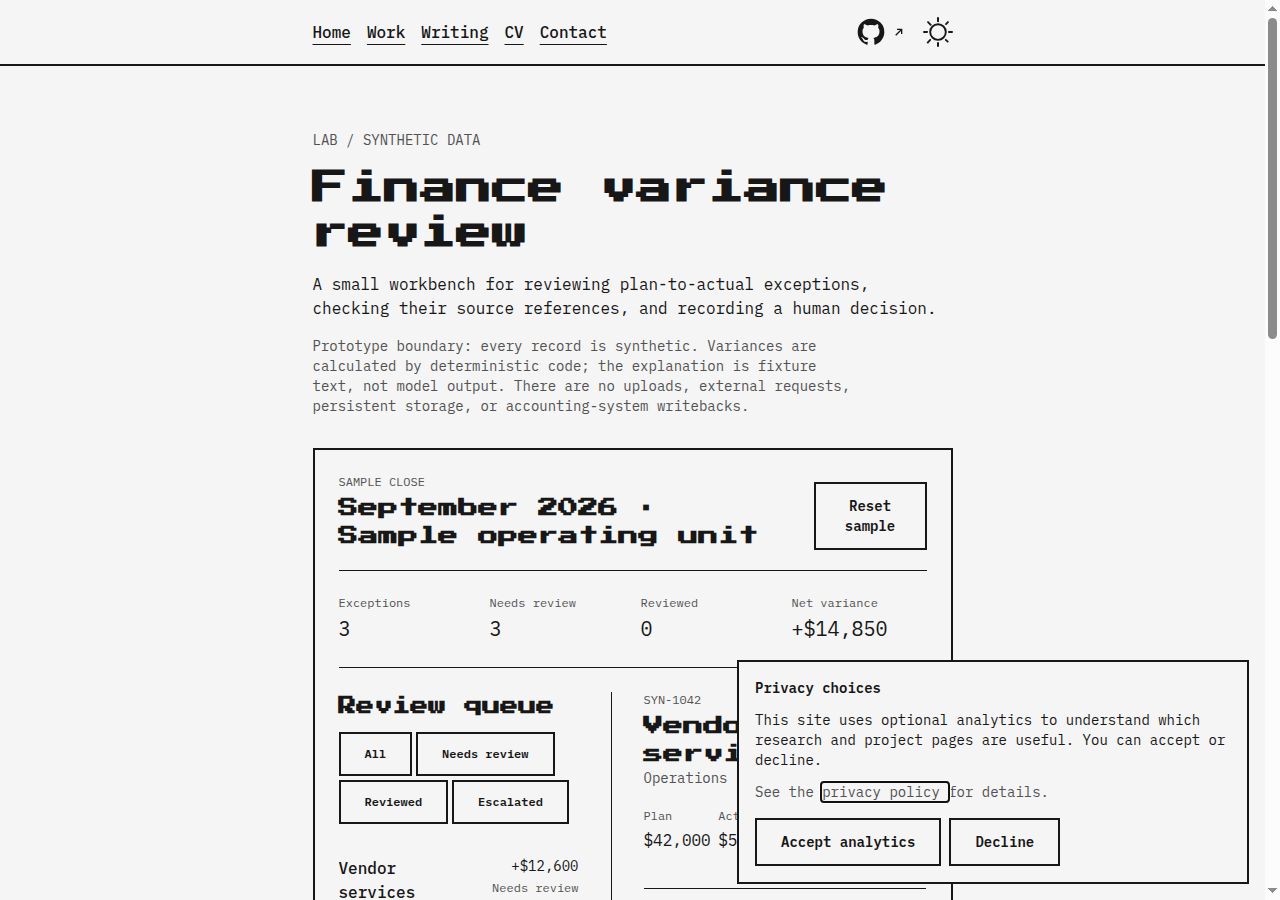
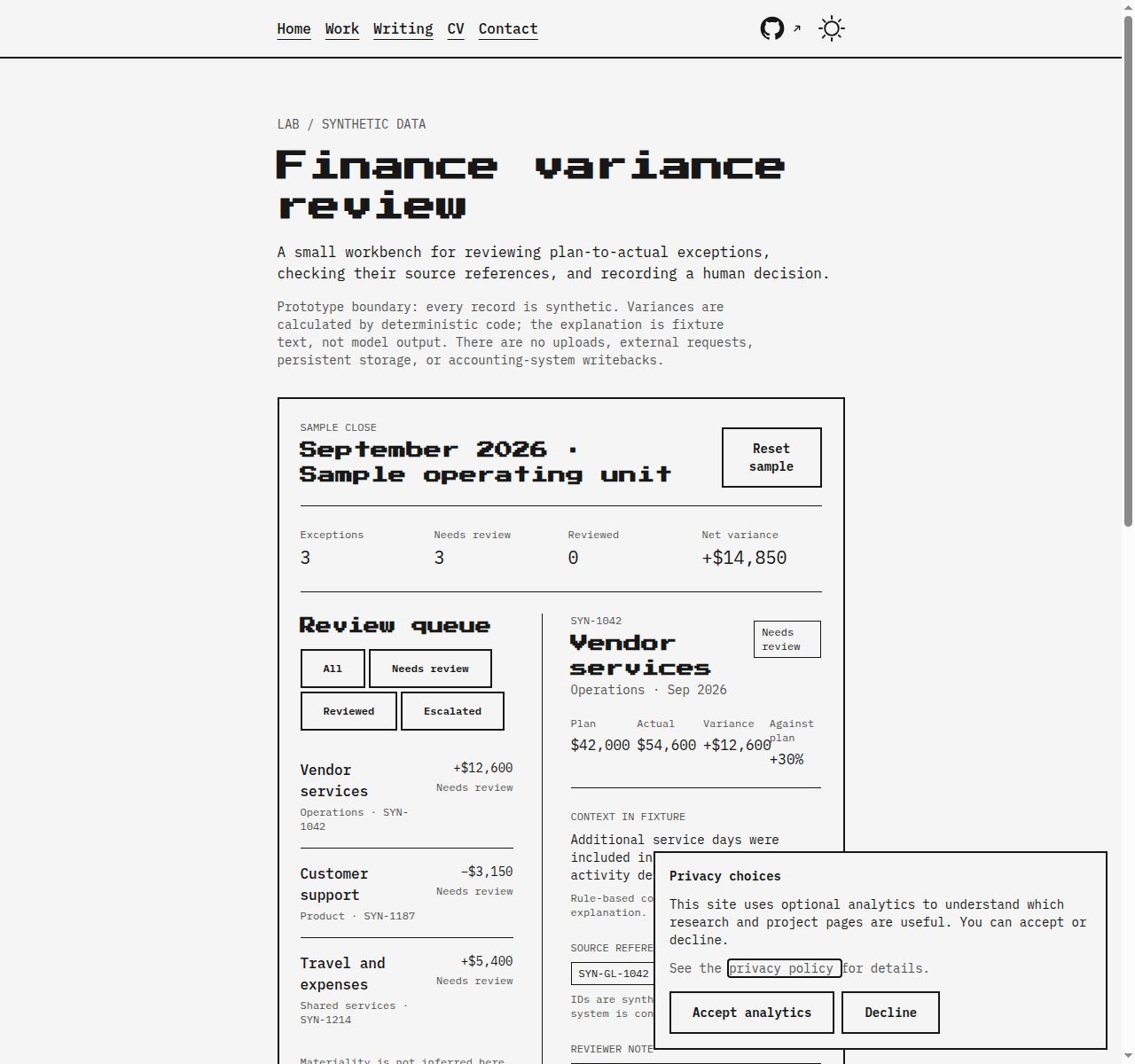
What a 30-minute review should inspect
Open the interactive demo and check:
- Zero-plan handling — variance percentage stays undefined instead of dividing by zero.
- Source references — synthetic identifiers sit beside the record they support.
- Review states — mark reviewed or escalated; counts and filters update; state stays in browser memory.
- Fixture honesty — context text is fixed fixture text, not generated reasoning.
Then skim the implementation source and tests for the calculation and review-state behavior.
Problem framing
Finance exception review requires more than a calculation. A reviewer needs to see the plan and actual, understand which source detail supports a proposed explanation, record a decision, and know what the tool did not verify.
This prototype makes that review path visible using invented operating-expense records and generic categories. It is a workflow demonstration, not an implementation for any employer or customer.
Status and evidence boundary
Status: interactive browser prototype. There are no LLM calls, file uploads, external requests, real finance data, connected source systems, persistent audit records, or accounting-system writebacks. No time savings, accuracy improvement, adoption, or production outcome is claimed.
A production deployment would require permission-aware integrations, finance-approved materiality rules, durable audit logging, security and privacy review, failure handling, and evaluation with domain-reviewed examples.